Press Office
Athens, 20-21 February 2020
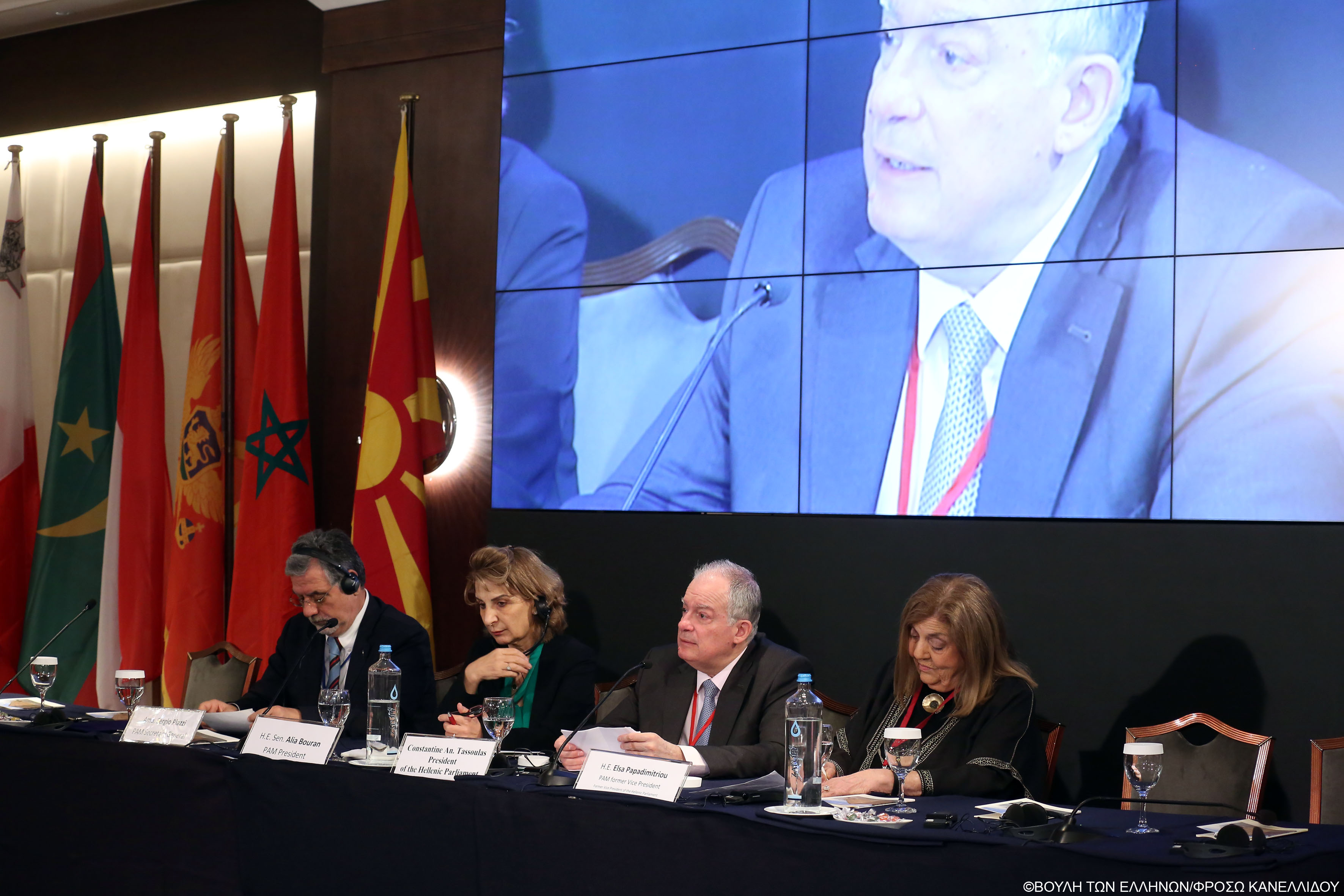
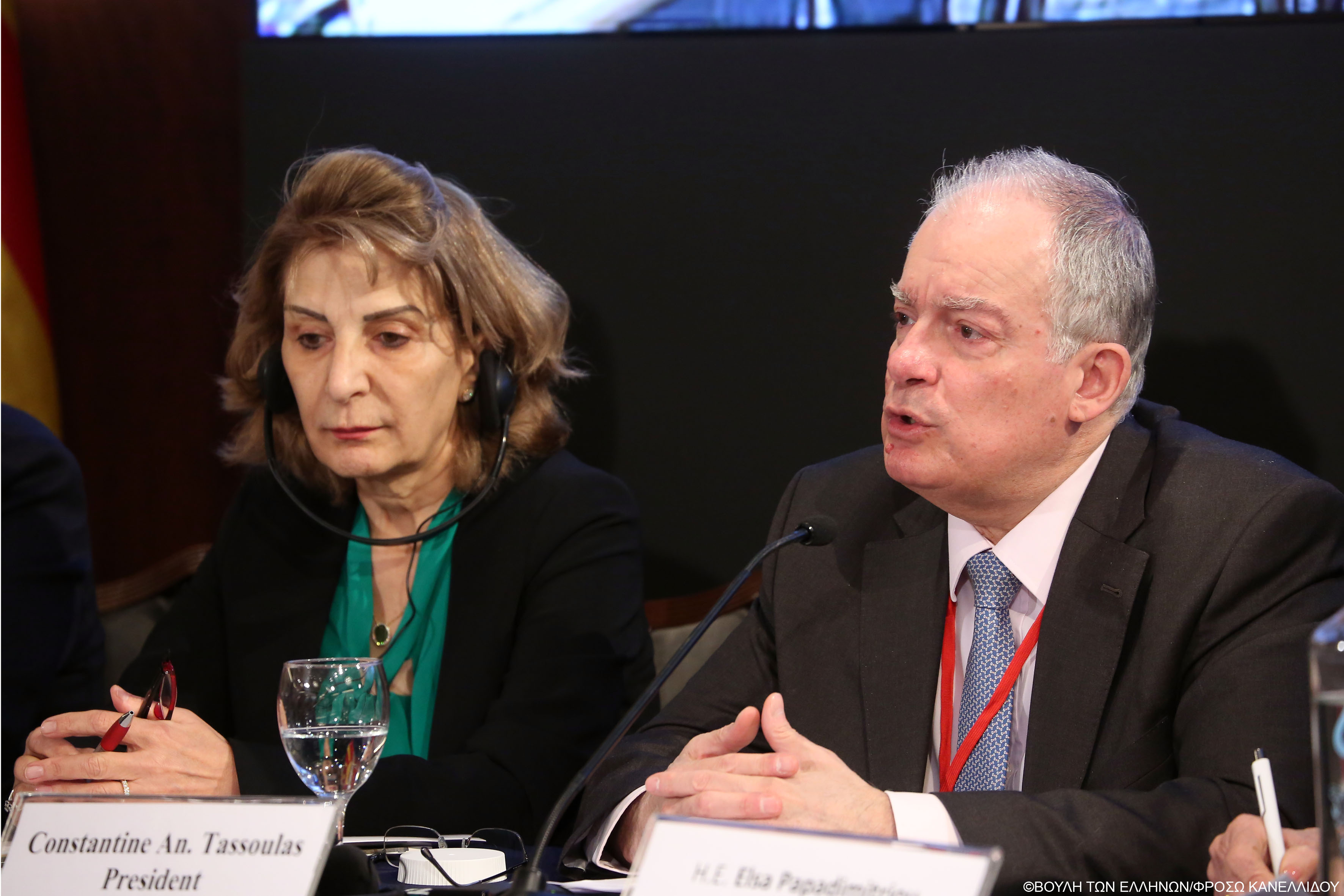
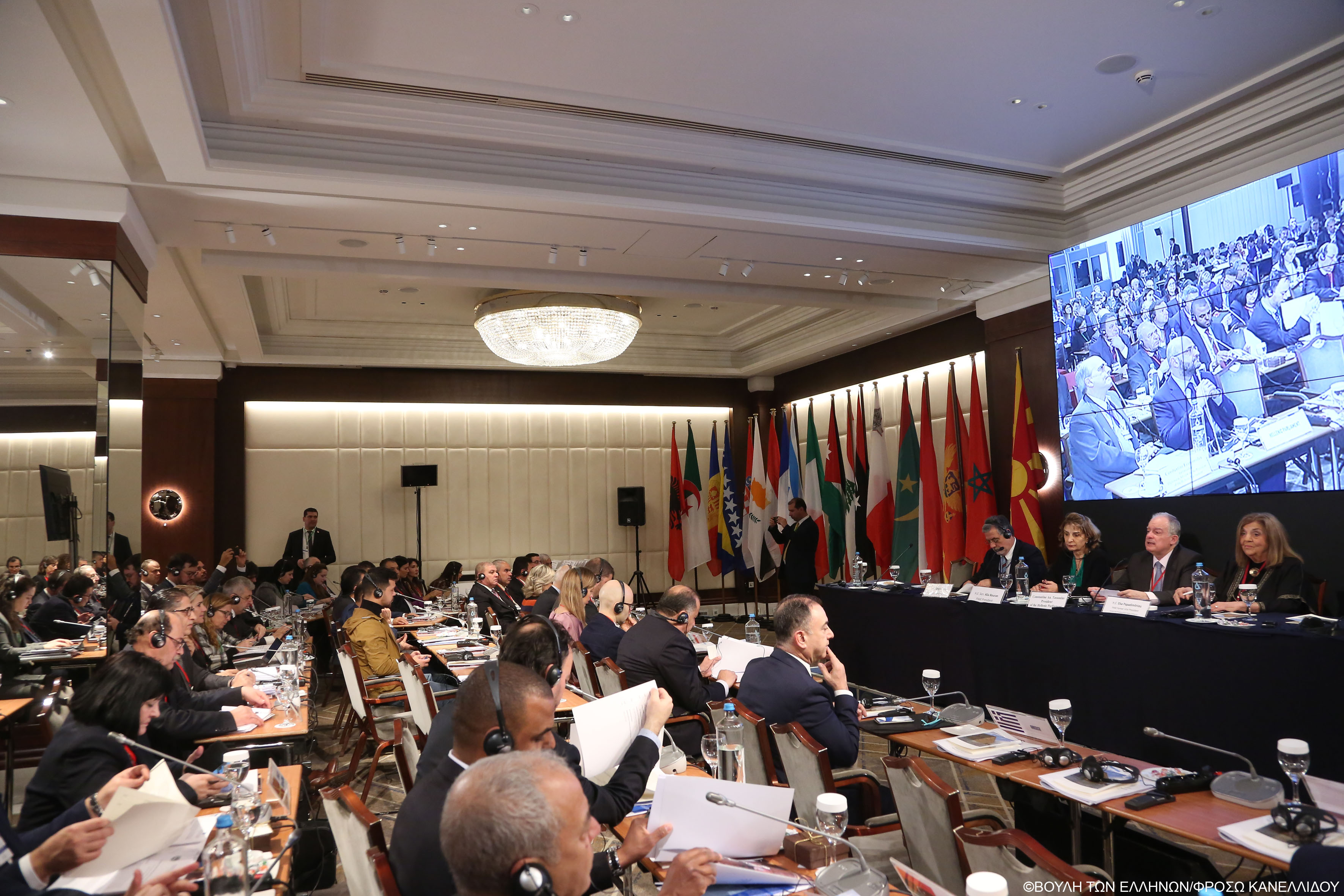
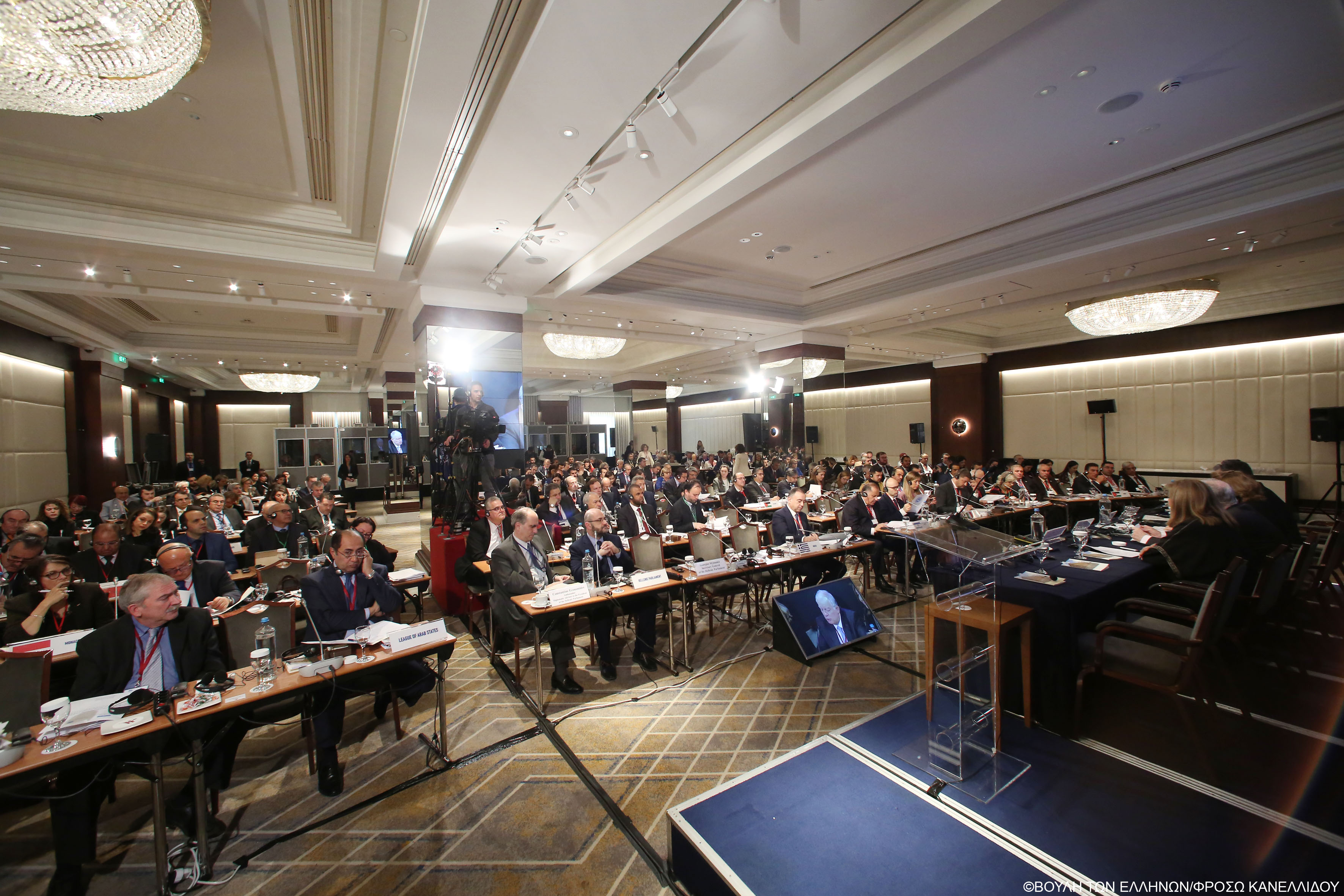
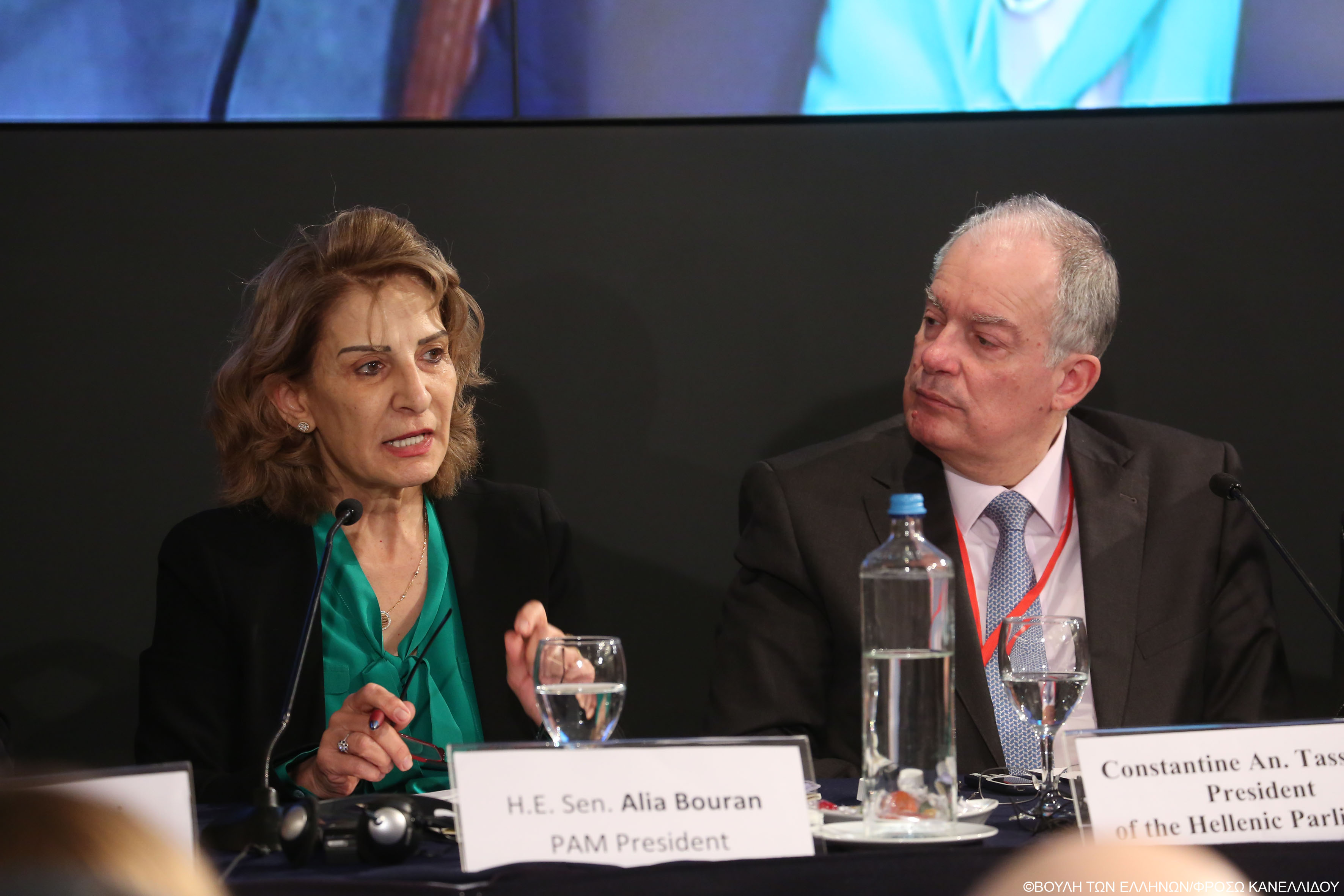
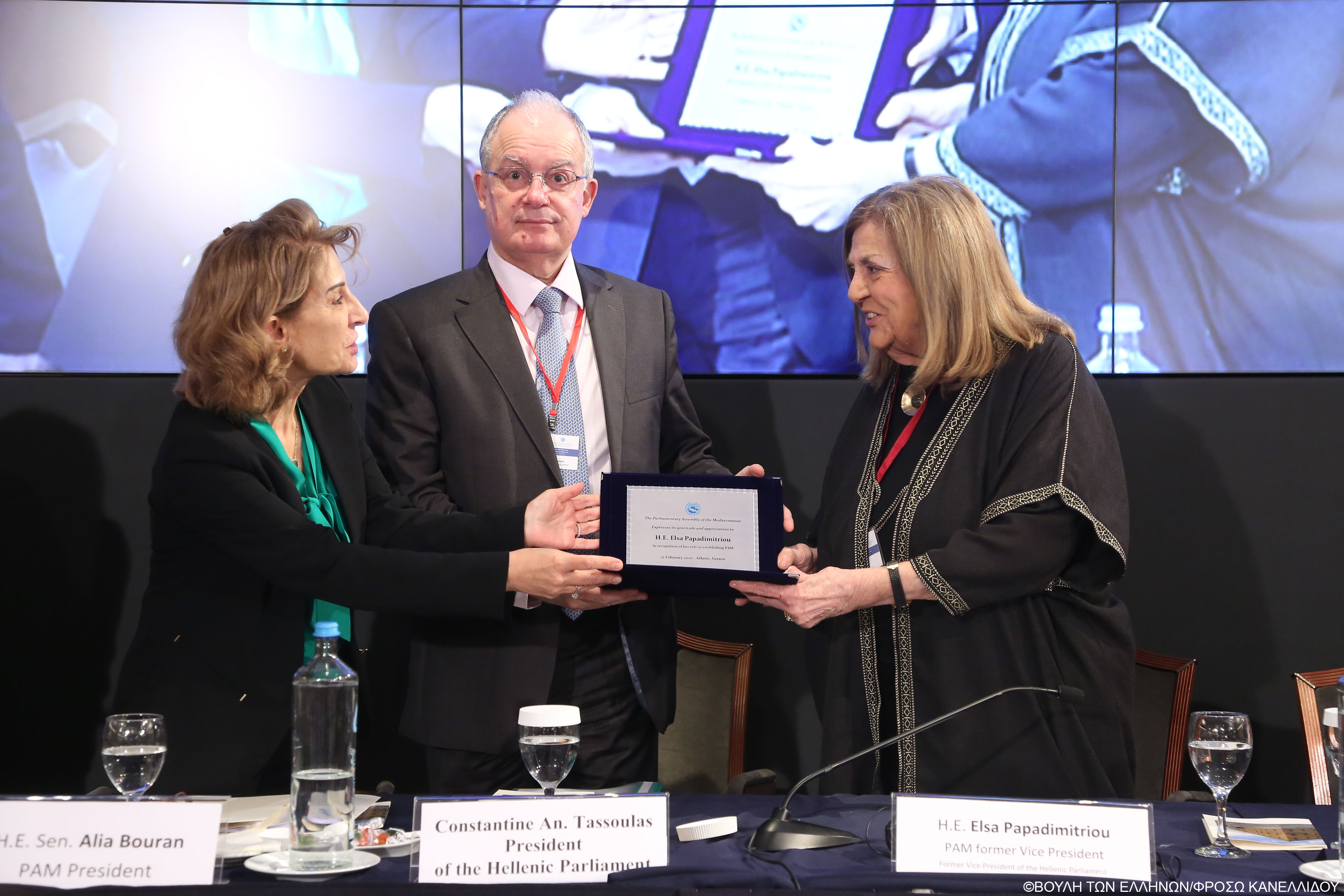
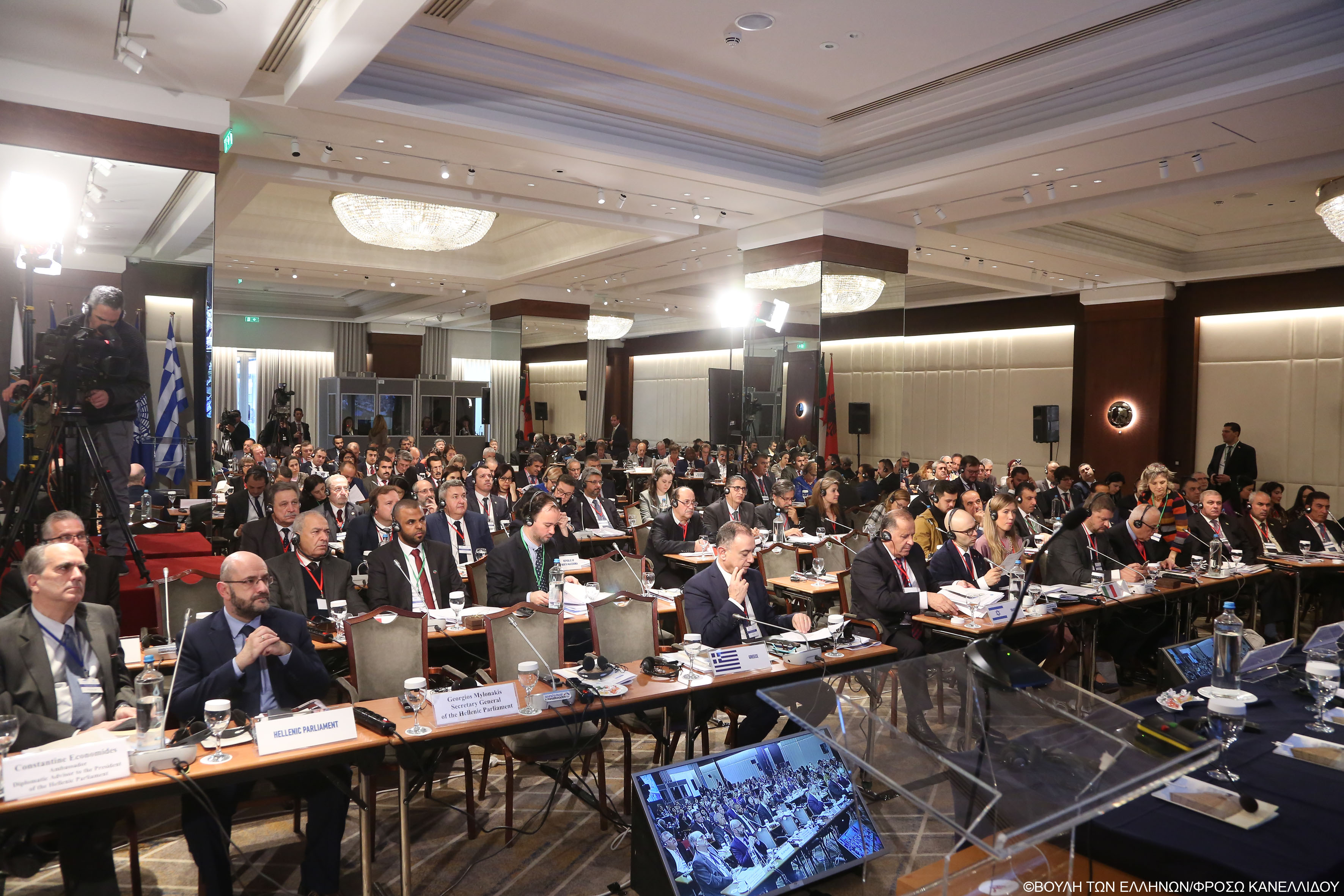
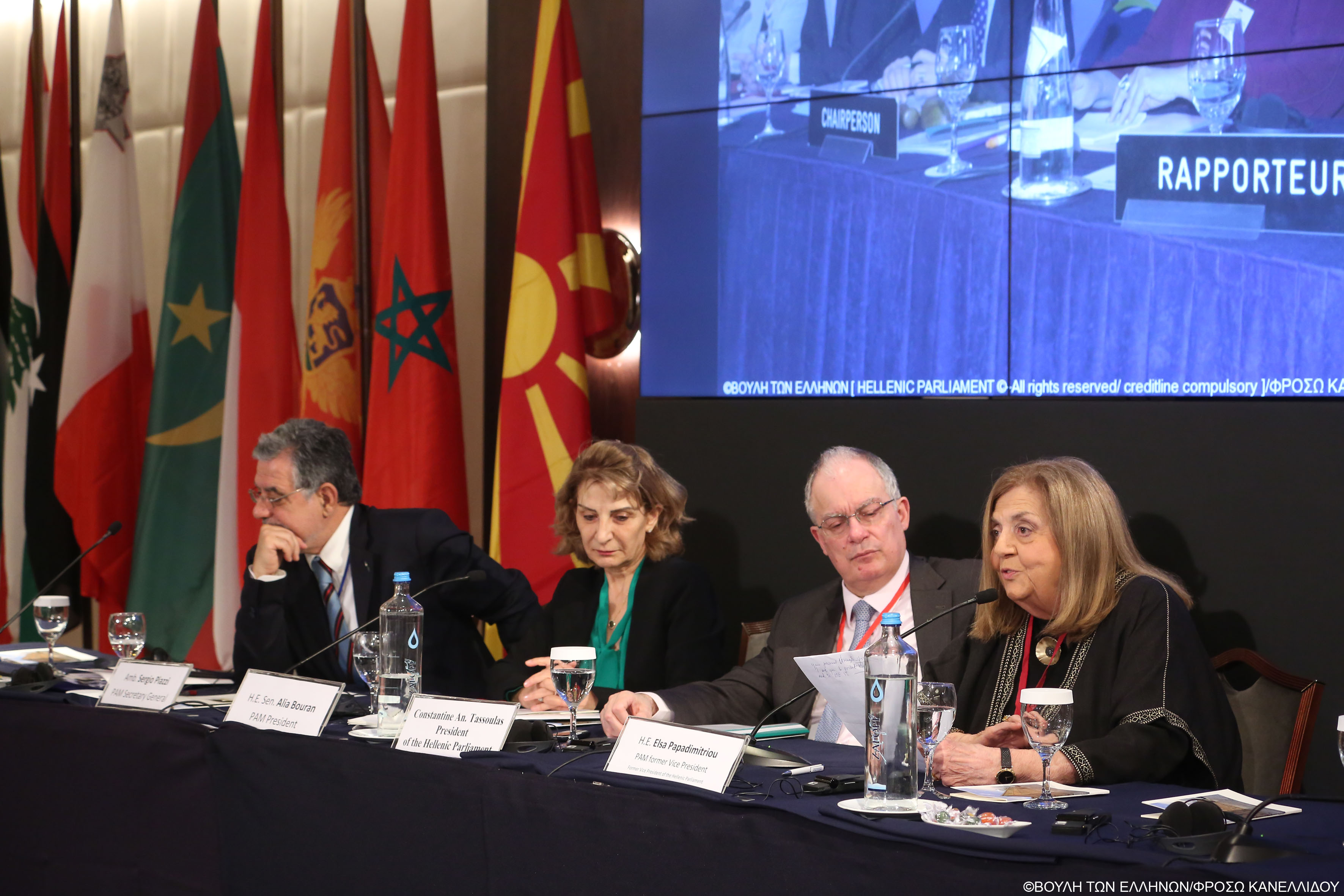
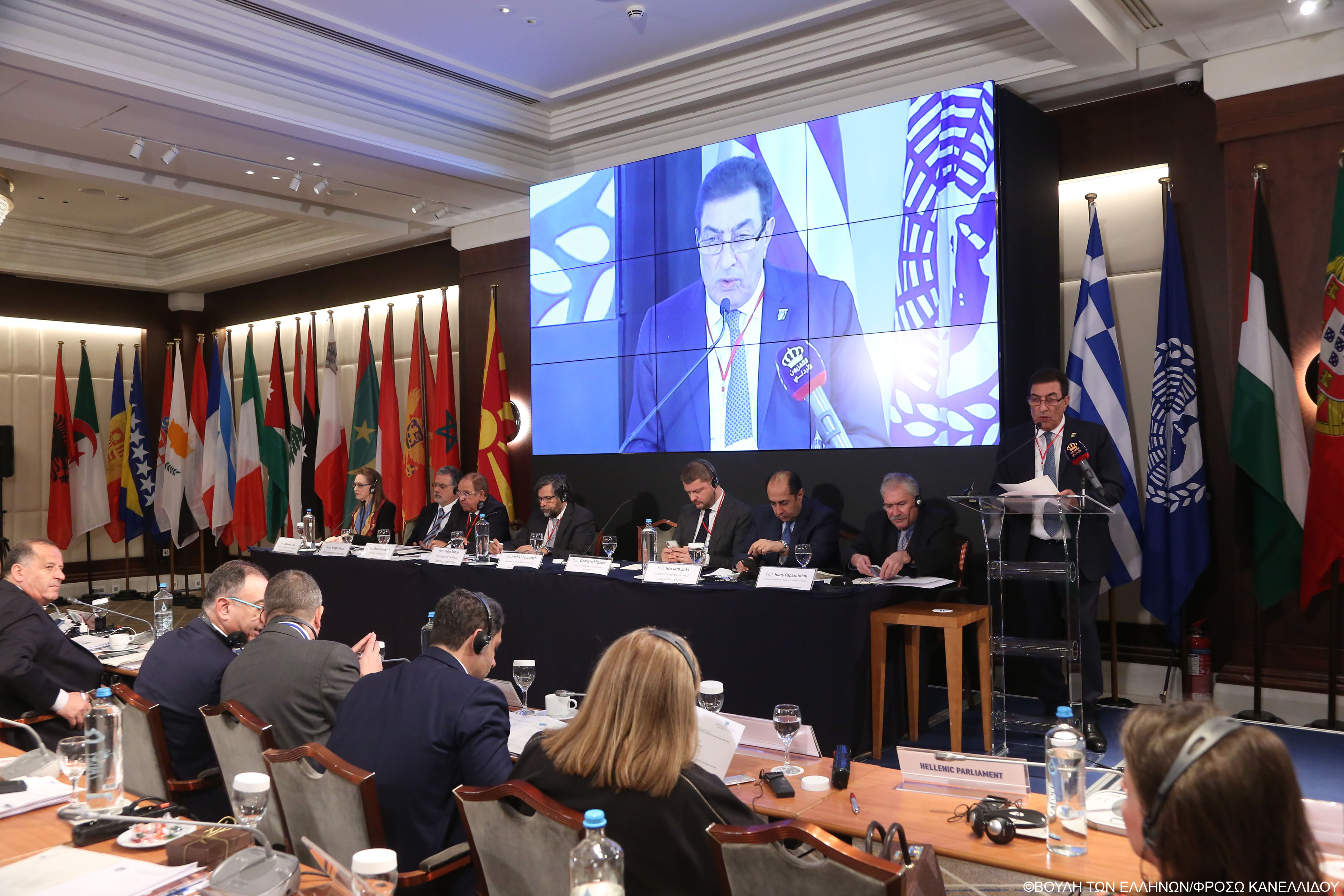
Opening address of the President of the Hellenic Parliament, at the 14th Plenary Session of the Parliamentary Assembly of the Mediterranean.
Opening address
by the President of the Hellenic Parliament
Constantine An. Tassoulas
at the 14th Session of the PAM Plenary
Athens, 20 February 2020
Madam Chair, esteemed Secretary General,
Dear colleagues, distinguished guests
It is with great pleasure that I welcome you today in Athens, in the heart of the Mediterranean. Your Assembly, for the establishment of which my country played a primary role, is possibly the most important forum of parliamentary dialogue on the major issues of the Mediterranean basin.
The historian Fernand Braudel viewed the Mediterranean as a single space, a complex whole, which through its diversity, through its majestic and tumultuous life and its extremely vast human wealth has been a historic place where cultures coalesced. At the shores of the Mediterranean met the Greek, Roman, Byzantine, “western” civilization, the latter shaped by the establishment of the European states of the West and the “eastern” civilization, shaped mainly by the Arabs. The Mediterranean countries, preserving their national identity, participate in an admirable way in the overall cultural creation of the Mediterranean with the sea and the light that bathes it as their common points of reference. A great Greek poet, who was awarded the Nobel prize for literature, Odysseas Elytis, said that the earth in this region is often not just bathed in light, but also obscured by it.
Unfortunately, the coexistence of the eastern and the western world in the Mediterranean did not always prevent differences from dividing the two civilizations. Divisions in the name of religious or nationalist segregation have led to confrontations, which resulted in the rise of conflicts, civil wars, violent clashes and turmoil. Swords and weapons speak their own language of bloody horror. Against this horror, it is our duty to raise our own ideas and actions, all of us parliamentarians, men and women. The parliaments, i.e. the representatives of the people, as the highest expression of the wisdom of the people, the ultimum sapientiae, and political action as a way to prevent violence, is the only answer that should be provided.
We are living in difficult times. The issues that concern our Assembly are not just regional, local. They are primarily global issues of our time. The fight against terrorism, managing the massive migration flows, climate change, the respect of human rights are the big global issues of our time.
The issue of managing migration is a major priority for the EU and for my country, which is carrying a heavy burden, a disproportionately heavy burden, of the refugee flows. We underline the importance of effective coordination between the countries along the Mediterranean routes, as well as the need for the full implementation of the EU-Turkey Common Statement of the 18th of March 2016. The migration issue requires a holistic approach, focusing on rescuing human lives in peril, on fighting the root causes of migration, on ensuring adequate protection for those in need, on fighting human trafficking, this appalling exploitation of human misery.
Greece, as well as others countries of entry, cannot carry, nor should they, the weight of these mass migration flows. The EU needs to adopt new common rules for asylum seekers. We need support programmes for the countries of origin and transit, we need a common decisive management of European borders, a common way of allocating flows, a convincing returns programme for those who are not entitled to asylum, support measures to integrate those who have the right to remain, and perhaps adopt a way of legal migration to the EU, on the basis of certain skills or labour requirements.
On this occasion I would like to congratulate your assembly for its efforts to achieve the goals of the Global Compact for Migration, since it reflects an important political and non legally binding framework of international cooperation, it respects national sovereignty and the rules of law and it ensures the protection of women and children.
Climate change is a vital challenge, an existential threat to humanity. If we don’t address it directly, if we don’t protect our natural environment, we will be deprived of the framework in which we have been constructing the myth of our lives, considering it a given and unassailable.
Given the fact that the Mediterranean is one of the most vulnerable regions climate-wise, Greece has already adopted the relevant National Strategy, it supports the Paris Agreement, as well as the European Green Deal, the strategic long-term and ambitious vision for a climate-neutral Europe by 2050.
The meager outcome of COP25 should not dishearten us. You, the members of the Mediterranean parliaments and PAM, must continue to actively work to achieve a green, blue and cyclical Mediterranean economy, become the driving force for a sustainable, just and balanced green transition. The recent warning by the UNHCR that the world must prepare for a sharp rise in the number of refugees due to climate change demonstrates the size of these challenges, both regarding the management of population movements, as well as the urgent need to take action to address climate change.
Ladies and gentlemen,
The recent developments in the wider region are just cause for concern. From this platform, I would like to stress that Greece remains fully committed to the principle of good neighbourly relations with all of its neighbours.
However, there can be no tangible progress in the relations between neighbouring countries, without the full respect of International Law, including the International Law of the Sea, as well as the International Conventions. Actions which insist on questioning the sovereignty and the sovereign rights of Greece, undermine the basic principle of good neighbourly relations, contravene international law and seriously obstruct efforts towards a mutually beneficial relationship.
For example, the memoranda that were signed between Turkey and Libya are null and void and cannot be implemented, while they threaten peace and stability in the eastern Mediterranean. Peace and stability in the eastern Mediterranean, which our Assembly ought to protect as the most precious thing. Greece is facing the challenges of our time with self-confidence, determination, strategic planning and a vision. We are a country on the borders of the West and we seek stability and security for the wider region, on the basis of International Law, good neighbourly relations, dialogue and cooperation and in this direction we will continue to work with all our might.
Dear parliamentary representatives,
it is extremely unpleasant that our region is rife with hatred and passions. In the era of the fourth industrial revolution, the people of the Mediterranean cannot remain stuck in the past. We are already in the next stage of evolution.
The world of tomorrow, the future big picture seems indecipherable to many of us and creates uncertainty. The shape of the new world and the gap between those who will enter it and those who will be left behind will be enormous. The upcoming changes will question the fundamental, genetic elements of the very nature of the human species, all of the things we have grown accustomed to. It is the new world of biotechnology which dramatically alters our anthropological assumptions.
So how do we address the issues of the new world? How will the human being be in this new world? As the great author Yuval Noah Harari very aptly put it, “… we now live along a single global river, a river of information, of scientific discoveries and of technological inventions. This river is the source of our prosperity, but it is also a great threat to human civilization and to the survival of the human species. No nation can hope to regulate this river of information and inventions by itself.”
It is our responsibility to insist οn cooperation, the challenges of the 21st century are global by nature and cannot be resolved by one nation alone. As political beings, we ought to defend and safeguard our principles and values of liberal democracy, of the rule of law and of human rights. We need to organize an international legitimacy that can be implemented, we need to protect human nature from the threats of technology and biotechnology and only draw from technology and biotechnology the benefits and adjust our legal and educational systems to the new conditions, contribute to reducing inequality, fight poverty and exclusion, protect nature and the environment, which is not as inexhaustible as we used to think.
Dear friends,
with these thoughts and having faith in the power and clarity of the human mind and believing that we can direct the course of history, I declare open the session of your Assembly. May your work be fruitful and constructive.
High resolution images
1
2
3
4
5
6
7
8
9
10
11
12
13
13
Back