Press Office
Athens, 15 November 2022
Participation of Hellenic Parliament delegation to the LXVIII COSAC Plenary Meeting
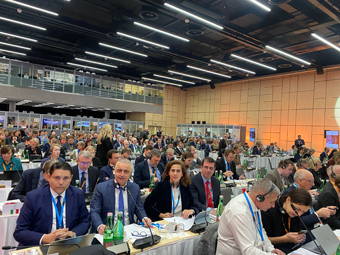
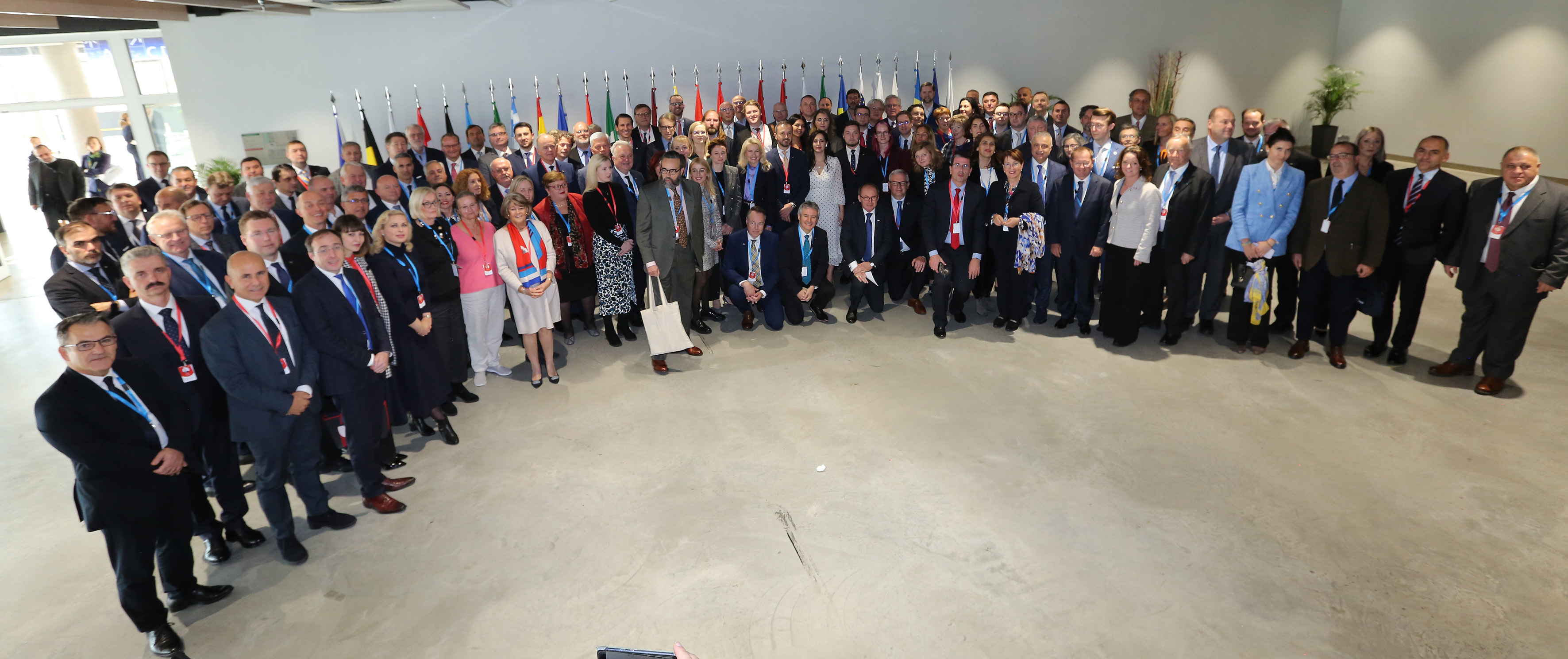
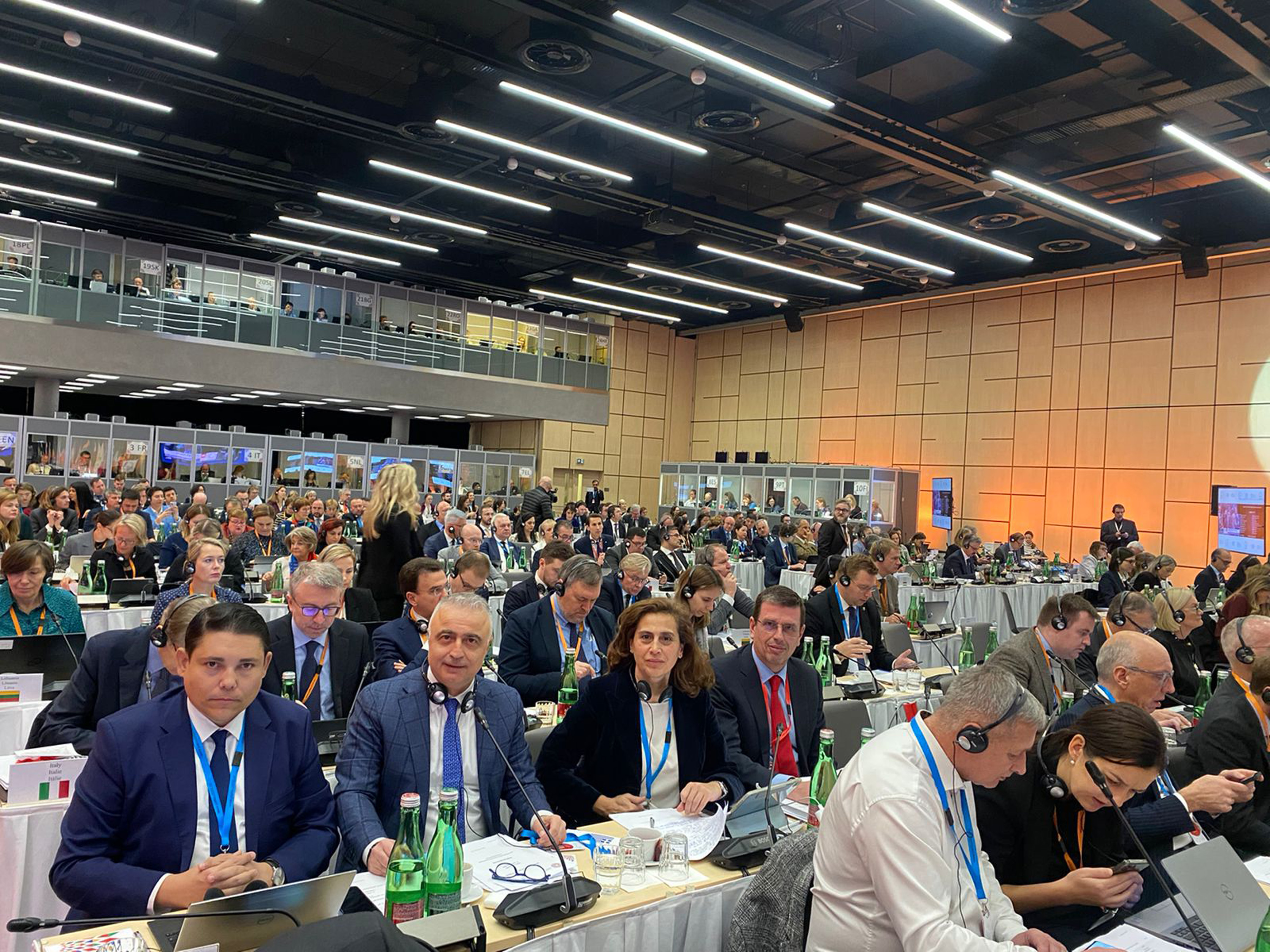
The work of the 68th Conference of European Affairs Committees of EU Parliaments, held from November 13 to 15 in Prague, was completed today.
The Hellenic Parliament was represented by the First Vice-Chair of the European Affairs Committee Dimitris Kairides and committee members Lazaros Tsavdaridis, Yiannis Bournous and Chara Kefalidou.
In his opening statement, the Head of the Hellenic Parliament delegation commented on recent developments signaling democracies’ resilience, allowing Europe to look to the future with greater optimism: Ukrainian forces are gaining ground on the battlefield, significant progress has been made in addressing the energy crisis, while the results of the mid-term US elections have strengthened the resilience of institutions and democracy.
Referring to the security sector, Mr. Kairides explained that the state of affairs in Europe's eastern neighbourhood is directly linked to developments occurring in the south, where civil conflicts are raging in Syria and Libya, moreover involving Russia and Turkey, which result in destabilising the Eastern Mediterranean region and clearly demonstrate the geopolitical interaction of south and east. At the same time, the Sweden and Finland NATO candidacies are being blocked, reminding us of the presence of other powers- besides Russia- challenging both International Law and international order in our region.
In the section on the war in Ukraine, Mr Kairides reiterated Greece's firm stance, renouncing Russian brutality and providing concrete support to the struggle of the Ukrainian people. However, unlike Greece, Turkey still does business with Russia, profiteering from the war in Ukraine, undermining sanctions and offering haven to Russian oligarchs and Russian banks. At the same time, the Turkish administration launches threats against Greece’s sovereignty on a daily basis. Given this situation and responding to a German colleague’s relevant advice, Mr Kairides brought forth the paradox of trying to convince Greek citizens that it is fair to continue sending military equipment to Ukraine at the expense of our country's defence needs, moreover when allied countries such as Germany continue to equip the neighbouring country with advanced weapons, practically supporting Turkish threats against Greece! Closing, Mr Kairides commented on refugee crisis management and the need for solidarity, giving the example of Greece having welcomed 75,000 refugees from Ukraine, in contrast to Eastern Europe member-states practices back in 2015, resulting to the European South shouldering the burden of managing the crisis alone.
With regard to the next phase of the Conference on the Future of Europe, which is all about the implementation of its conclusions, Mr Kairides stressed the importance of national parliaments’ active involvement, as being the most genuine and direct representatives of the will of the people. In this respect, he emphasised the indisputable vital role of national parliaments in CoFE follow-up.
Speaking in the same section, and specifically regarding Euro-scepticism trends, Mr Burnous stressed the need for the EU to strengthen institutions that foster honest dialogue, expose problems, investigate, control and demand accountability of power structures. In this direction, it is imperative to strengthen national parliaments, providing them with extended powers and participation in the legislative process. Mentioning specific CoFE proposals, he noted the need for a more active citizens’ involvement, transparency in the decision-making process, the democratic election of the President of the Commission, European electoral list and the need for a formal restart of the Union, by calling for a Convention on the Treaties’ revision.
In the section on the European perspective of the Western Balkans, Mr Burnous noted that 23 years after another devastating war in the heart of Europe, the Western Balkans accession process is expected to decisively strengthen Europe’s security and stability; it is imperative for the EU to honour its commitments despite shortcomings and delays of necessary reforms in certain countries. Following the historic Prespa Agreement reached in 2019, which was a significant achievement and example of conciliation for the Western Balkans and beyond, the European administration failed to keep a right attitude towards Albania and especially towards North Macedonia. European administration inconsistency has a destabilising impact, as it makes room for third party intervention pursuing own geopolitical interests in our neighbourhood.
Mr Tsavdaridis, in his intervention on the EU's strategic autonomy, noted that the visible risk of a food crisis in Europe – which is one of the effects of the Russian invasion of Ukraine-, has highlighted the need for agri-food sector support, now suffering large increase in costs of energy, raw materials and fertilizers. Provision of maximum flexibility by the European Commission to member states during implementation of the new CAP Strategic Plans as of 2023, is a key issue for the support of European farmers. Greece, through its National Strategic Plan, seeks to contribute to the strengthening of agricultural income, to attract young farmers by supporting their business prospects and to provide safer, healthier and quality food, focusing on research, technology and innovation.
In her intervention, Mrs Kefalidou called attention to the insecurity experienced by modern societies when faced with opportunist leaders pursuing their own purposes, moreover stressing the need to improve state response tools and, by extent, the administration’s readiness for effective response to emerging challenges. Mrs Kefalidou emphasised that it is inappropriate to apply International Law “à la carte”; in the same spirit, migration policies are not sustainable if they don't include responsibility sharing and practical solidarity between member states; and concluded by saying that the sole way of responding to turmoil is to boost and strengthen Europe, through a well-planned common strategy.
High resolution images
1
2
Back